Showing posts with label time. Show all posts

Sunday, April 23, 2017

Moments into Memories; A Most Precious Resource: Week #15

When I was younger, I remember thinking that the school year lasted so long. I loved being in school so it was never a problem. The older I got, however, the faster time seemed to go. It was like a few days were taken out of each year and every year seemed shorter and shorter. I'm not sure if other people have had this same experience, but time has only seemed to go quicker. Time was the one thing that I could never control; it just kept on going. 

In a blur, I graduated high school, even took off a year of school for state office, and then went to college. I somehow breezed through 3 1/2 years of college made it all the way to student teaching. It was the semester I thought would take the longest and yet, I am standing here no longer titled "the student teacher" and facing two weeks until I graduate. These precious fifteen weeks have passed by too quickly. But when I look back, I realize that I've done so much and seen amazing growth in myself. 

In this final blog, I want to reflect on some moments that stood out in my educational development this week, and then reflect on student teaching as a whole. Even though time is constantly running, I hope through these blogs, I have preserved my learning and captured my growth. 

My last FFA event: students helping out at the chicken bbq

Guest Speakers

This week, I got to facilitate 2 different guest speakers. On Monday, David Swartz from Perry County Extension came in to talk about the Avian Influenza issue. In an advisory committee meeting, David mentioned the importance of educating others about the hit this country is still taking on the avian flu and how it is impacting farmers. It was neat to see how a comment at a meeting turned into a valuable learning experience for students later on. The students' eyes opened when they learned about the issue (many for the first time) and when they started connecting just how impactful it is to everyone, not just poultry farmers. 

David Swartz talking about the Avian Influenza

On Wednesday, I tried out the Skype in the Classroom. We took a virtual field trip to Kenya to visit the Mitahato Education Fund to talk about crops and agriculture in Africa. The students and I had touched on some global agriculture in my agronomic crops unit and were creating and presenting their own lessons on crops grown in the United States. So it was neat to connect what they've learned to what others were doing across the globe. I only wish we could have had more time for questions!

A farmer from the Mitahato Education Fund speaks about agriculture in Kenya

Students teaching each other about ornamental crops

Speaking from the Heart

In my Leadership class, I was having students perform their This I Believe speeches. Students had been developing and expanding their personal beliefs and engaging in meaningful discussions about their life philosophies. I loved posing questions to them to get them thinking. They weren't afraid of sharing their thoughts and being open to new ideas. We had some good stories and discussions come from it!

Through their final personal This I Believe speeches, students were tasked with explaining their own beliefs and sharing a personal experience to shape that belief. The students did a great job sharing their beliefs and some were truly touching. It really connected the students in the class and allowed me to learn more about them. In this I realized how much I can connect with them through my own experiences. I only wish I did this unit earlier rather than the last week of school! Despite this, I think it was a great way to end this class as I ended student teaching.


A reflection of student teaching

Fifteen weeks has come and gone. Student teaching was a true test of my willingness to work hard, be flexible, to embrace and empower the unknown and uncertainties, and to realize the value of progress, not perfection. If you have been following my string of blogs, you may have seen each of these themes from time to time. I value each of these lessons I have learned from my mentor teachers and students. Each moment I was at Greenwood was a chance for me to practice those characteristics. 
Animal Bioscience!
I have uncovered a part of me that I didn't know existed through this internship. Having been a student all of my life, I only saw education through this lens. But when I flipped perspectives, I almost had to relearn who I was and how my current skills and characteristics blended into who I was as a teacher. I now feel a sense of maturity and understanding as I balance the person I always was and will continue to be, with the type of teacher I am aspiring to be. I have not changed; rather, I have made myself better and refined the skills I had all along. 

Food Science!
I look forward to my future in agricultural education and hope that I will continue to grow. I can't wait to see what the future holds for me. Even though it hurts to leave and I feel like there is so much more I wish I could have done at Greenwood, I know that my time is done and I have put my best foot forward. We were taught at Penn State that time is an ag teacher's most valuable resource. Time is the one thing that we cannot control so therefore we must live out our lives in such a way that time does not pass by wasted and gone. I hope that I have used my time in the most effective way possible. I believe that each moment spent was a moment worth spending. Now those moments are memories that I will cherish forever.

A jar full of notes from my students!

A time for gratitude

I wanted to take a moment to say a big thank you to everyone at Greenwood for their amazing support. I wanted to share a special thanks to Krista Pontius and Mike Clark for their wonderful mentorship and guidance throughout these fifteen weeks while serving as my cooperating teachers. I couldn't have done it without them!

Leaving Thoughts

"1 Year = 365 Opportunities" -- Unknown
"New beginnings are often disguised as painful endings" -- Lao Tzu
"Perhaps this is the moment for which you have been created" -- Esther 4:14
"There's only one thing more precious than our time and that's who we spend it on" --  Leo Christopher

Saturday, March 4, 2017

Shifting Some Gears: Week #8

This week, I am still pushing through some of the challenges of the previous week, but I think some new gears have been shifted and I'm hopeful they're in my favor.

New units and changing techniques

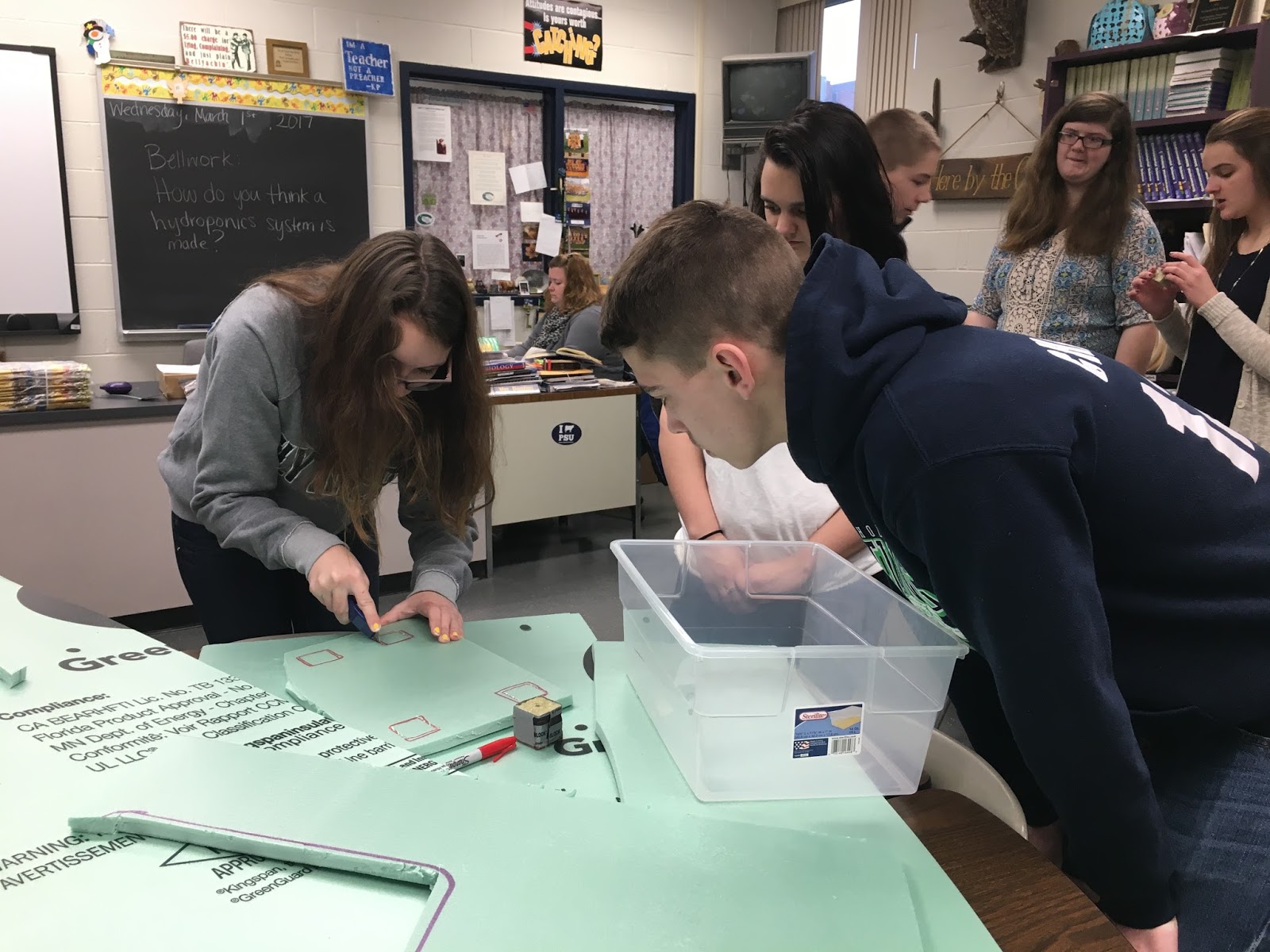
I am finally done with my unit on pest management, and I am moving onto alternative uses for plants. This unit includes my hydroponics project, so students have been doing much more hands-on learning by making their hydroponics system. I think they enjoyed this and I have really been trying to think of ways to make my lessons more hands-on and student centered. I find it hard to do sometimes, when the content I want them to understand is so specific, so I am thankful for projects like these where I can let them take the stage. I also had my students do a discussion on the uses of hydroponics in developing countries where I told them I was going to step back and let them discuss. They're a quiet class and being the first class of the day doesn't work in my favor so I was was worried that this discussion wouldn't go well, but once they got going, it actually went better than planned and I think they enjoyed it!


I tried this in my food science class as well. Other than introducing the topic of food irradiation, I didn't talk much about it at all. Instead, I split them into two groups and had them do some research on it, and then had them create a debate on the pros and cons of irradiated food. This is my talkative and energized class, so I think it was a great fit for them. Again, I didn't anticipate the debate taking very long at all, but they spent the entire class period on it, and they had some really great arguments for and against it. 

Food science debate on food irradiation

I know I can't rely on this all of the time, but I now know what it looks like to try a less teacher centered approach.

Into the shop!

I'm also excited because I'm getting students to actually start working in the shop. In welding, I gave them a demonstration (which went pretty well despite some of my fears!) and they got to practice with their welds. I have some challenges with students being uncomfortable welding, but I am hopeful that the ones who are motivated will get the opportunity to practice and make something neat. I know that flexibility is key for the other students, but it does make it a little challenging to essentially plan two different lessons for the same class period. It is also a challenge because I want to make sure I am watching for safety of the students welding and I don't want to have my attention divided. But I know that each student is important and I have to make that commitment to educate each of them. 

I don't have my small engines students in the shop yet, but next week, I'm going to get them working in there. They haven't said so yet, but I think they're itching to get their hands dirty (I know I want to see them in action!). So I think that will make planning those lessons a little easier.

The pressure is on

Public speaking exercise
Before, I felt that I had a lot of time, but now I am starting to feel some of the pressure of deadlines. I really want to take my time with my public speaking unit, for example, but many of them are also competing in the speaking contests and they must hand in their manuscripts by next week. This means I need to speed up some of my lessons or remove some completely. Again, I know that flexibility is key, but I also hate rushing students when I feel they need more time. It just means I need to be more efficient with my lessons. 

Another public speaking exercise on tone of voice with children's stories!

I also feel some pressure in making sure I complete all of my units before the conclusion of student teaching. Everything has taken much longer than I anticipated and everything has had to be shifted to later dates. I am working through some ways to be more efficient without leaving the students wanting more, so hopefully this will work itself out in the end!

In the world of FFA 

Secretary of Agriculture Russell Redding and Representative Mark Keller at the Farmer's Breakfast with Perry County FFA members and State FFA officers
On Friday, we attended Representative Mark Keller's breakfast. This breakfast hosted by Mark Keller introduced several different speakers and organizations that contribute to agriculture and growth in the county. It was neat to meet some new people, and become a little more connected with the county. 

Plans for next week

In plant science, students will continue working with their hydroponics system and will learn a little about aquaponics as well.

In small engines, I am getting students in the shop and having them disassemble engines.

In agriscience, they will continue to work on their speeches.

In welding, Mr. Statler will not be there, so I can't have them working on the equipment. Instead, they will work on a career exploration project.

In animal bioscience, we are going to finish with the anatomy of the udder and then we are going to talk about milk components. 

In food science, we will cover food packaging, and finish up our unit on food preservation. I anticipate moving onto the next unit by the end of the week.

In leadership, students will continue working on their speeches for the public speaking unit. 

Leaving Thought

"When it rains, look for rainbows. When it's dark, look for stars" -- Unknown

Friday, January 27, 2017

Getting Situated: Week #3

There's a bug going around the school and it's not the kind we're learning about in my Pest Management unit! Everyone is catching the nasty cold and flu this week so we've had to be diligent about hand washing and personal space. Many were out sick, and I definitely caught it too... gah! Despite all of this, I was able to push through the week and make the best out of it. The students are real troopers!

I'm really starting to feel situated in my placement now. While I don't have a full class load yet, I am comfortable with my students. I am starting to find that flow as well, and I think the students can feel more comfortable because they see that I am a little more relaxed as well.


Students in Mrs. Pontius' Food Science class doing an experiment

Time savers


One of my issues is that everything takes much longer than anticipated to complete. I don't mind going at the pace the students need, but I worry sometimes that the application or the "fun stuff" is also getting pushed to a later time. In some cases, they cannot move on until they understand the content, so it's challenging for me make it more interesting. For example, today I wanted students to go through a powerpoint and take some notes about weed characteristics about specific weeds. Following this, I was going to try a party host moment with them where they would pretend to be a weed. They would introduce themselves as the pest and would ask questions about the other. For example they might ask, so do you come here annually, biennially, or perennially? It was supposed to be kind of cheesy but kind of fun!

The issue is that we didn't even get through the whole powerpoint today. We did do something else before hand but if I didn't do that, that would have meant we would have spent the whole class period on just the powerpoint.. a big no no!

One suggestion for me was to have guided notes for them where they could fill in the blanks instead of recording all of the notes. Mrs. Pontius said that even though I told them several times that they didn't have to write everything word for word, there are still some of those high achieving students that will do that. Writing everything down from the powerpoint takes a lot of time. Guided notes would have saved that time while still addressing my concern of making sure they were engaged while I was presenting. 

I need to begin thinking of more ways to save time and work for students so they aren't worrying so much about writing everything down, and rather, just practicing, identifying, and otherwise learning. 

Discipline and management


I really truly enjoy my students, however kids will be kids! I haven't really had too many discipline issues, but this week I did start seeing some really minor things. In plant science, I had given students a little research activity on insect pests and they were to present their insect to the rest of the class. We didn't finish the research portion the first day, so I gave them about 5 minutes the next day to work on it and then present. There was one group that had finished it the day before, but their friend who was absent that day had their packets. So they couldn't present that day. 

Classroom Expectations, Procedures, and Consequences
I should have done a better job walking around and making sure students were prepared, but they also didn't care to address this issue with me before hand nor did they attempt to re-look up any information to help solve the situation. It was a pretty informal presentation, but still certainly not fair to the other students who put in the effort. There wasn't much I could do except wait until the next day for them to present. I realized afterwards that it would have been such a great time to point to my expectations posters behind me and remind them of the preparedness expectation! But I thought about it after the class was over so it was an opportunity missed, unfortunately. Either way, I now know to be more diligent with that and to not pair certain students together if they cannot complete that assignment. 


Wrapping up this week


Overall, I think there was a lot of learning for both myself and the students! Another hurdle I will need to tackle is catching up students who have missed two or three days! That's going to be a challenge, however I'm hoping that I can work through this and get them back on track soon.

In other news, I guest taught in the Spanish class today. I spoke about my experience in Mexico (because I can never talk enough about that!). I even used a little bit of Spanish and had them practice some key vocab words. While it is not teaching in the formal sense, I enjoyed getting in front of students and sharing my knowledge. It was really a confidence booster and now hopefully I've made a connection to those students who are in my other courses. I think it goes to show that teaching doesn't always need to be formal.. they can learn through experiences of others. Learning can happen by simply sharing the wealth and engagin in discussion. 


Going forward


Going forward from here, my goals next week are to work on grades and putting grades in the grade book. In this, I plan to sit down with my cooperating teachers and have them show me how they do it and have a conversation about assessment, etc. 

Another goal is to catch up students who have been behind. Hopefully they will all be healthy and back in class by Monday so we can start from there. 

Next week in plant science I will be finishing up with weed pests and do a hopefully brief lesson about diseases. Then I will assess students with their pest ID quiz. Following this, I will get into pesticide application and usage. 

In small engines, they are just wrapping up on tool identification and they will move on to talking about what small gas engines are and then into parts identification.

In welding, students will be talking about safety and will make a safety poster presentation. My hope is to complete the safety portion next week, but they meet every other day, so I will need to be adamant about connecting concepts from two days before!

Leaving Thought

"Your mind is a garden. Your thoughts are the seeds. You can grow flowers or you can grow weeds" -- Unknown 

Sunday, January 22, 2017

Keyword: Flexibility: Week #2

I started this week with probably one of the neatest in-service days I'll ever have. There was a program for those teachers in the district who wanted to be certified to instruct archery. My cooperating teachers and I signed up for this course and spent the majority of the day learning about archery, safety, and shooting techniques.


Not only was it a great experience to get to know other teachers around the school, but it built my confidence in my abilities to perform something I once thought I wasn't good at. Once I learned the technique, I was constantly hitting bulls eyes! I won't get all deep and sappy, but I think that is the perfect metaphorical experience to compare to student teaching. I had been so nervous leading up until Tuesday (when I began teaching) but once I started teaching, I was fine. It felt great teaching and felt completely in my element. Sure there are things I still have to iron out, and I know I still need to develop my flow in the classroom, but I think just like archery, I just need to follow what I've been taught, try my best, and keep practicing until I hit that bulls eye. 


This week was the first week I started picking up Plant Science and Small Gas Engines. On Friday I also began teaching Welding as well. 


Lesson plans

I thought I would be holding onto my lesson plans like a crutch the entire week, but as it turns out, I didn't even touch them during instructional time. There are a few reasons why this happened. One, like I said, I felt good teaching. Normally when I get nervous I forget what I'm supposed to teach and I need to look at my plan. But running through it before the start of class and perhaps growing in my confidence allowed me to remember what I needed to do. 


For another thing, I reached a small crisis the night before when I realized that I needed to move around some of my activities. I realized it didn't make sense for them to learn one thing before they learn the next. I still taught the same things I was planning, just in a different order. So my lesson plans ended up being all out of order anyway. 

I do really like writing my lessons out beforehand because I like to think through what I will be presenting. But I feel that at least for now, I don't need to use them during class. I know there will be a handful of times throughout the semester where I will have to reference them in class simply because I put specific instructions or reminders in my plans. But other than that, I tend to write down my bellwork, interest approach, and the one or two activities we are doing on a sticky note and I'm good to go. 

Time flies...

One of my concerns going into student teaching was being able to accomplish my objectives and thus my activities within the 42 minute time period as I planned out in my lesson plans. This concern is now a reality, though it is certainly not the worst thing to happen. I tend to teach only one objective and get through about one activity. I still need to learn how to gauge how quickly students work which is part of the struggle. But I think we all agree that it is better to over-plan than to not plan enough.
 

I'm sure that there might be small things I can do classroom management-wise to get more done in one class period, but I think that more than anything, I realize how important it is for teachers to really think about what they need to teach vs. what they want to teach. I plan on removing a few lessons that I wanted to teach so my three-week unit wouldn't turn into a six-week unit. The lessons that I wanted to teach certainly relate to the unit, but aren't essential to understanding the core concepts. I considered having them do some of the work for homework, but I would want to spend some class time talking it over, which defeats the idea. Teachers need to be purposeful in what they teach!

Flexibility

Mr. Clark gave me a vocab word for the week which will probably hold firm for the entire semester; Flexibility. As I learn to adjust and I learn what my students need to thrive, I must be flexible. For example, Thursday I took charge of the freshman agriscience course so Mr. Clark and the shop students could work on the baseball dugout project. It wasn't planned, but I was able to take charge of the class and get them to finish what they needed to finish. 

Another example was that Mrs. Pontius was out on Friday. They had a substitute come in her absence. I was teaching plant science and had my powerpoint up and ready to go, but for some reason, the sub and I couldn't figure out how to hook it up to the projector. Instead of having the students sit there and do nothing, I quickly adjusted and had them work on the activity they were originally going to do at the end of the class period. Luckily it worked in my favor because they didn't need the powerpoint to do the activity (though it would have really helped with their understanding), and the activity ended up taking the whole class period (there's that time factor again). Had I presented the powerpoint as planned, they might have had to stop mid activity and pick it up again on Monday. Now I can just present the powerpoint and not worry about finishing the activity. I don't think it will always work like that but being flexible certainly helps get through that!


Looking ahead to next week

I learned a lot just in this first week, and I am eager to continue growing. I didn't talk about welding too much in this blog, but my goal there is to get my students motivated to want to participate. I sense a lack of will-power in my small class that I want to really crank up. Their class is also only every other day so I know it is even more important to build that rapport with my students.

In plant science, I will be teaching them about insect mouth parts. Then we will be identifying specific insects. Next, we will get into identification and classification of weed pests. 

In small gas engines, we will finish up our safety discussion and they will take their exam. Then we will start talking about what small gas engines are, and finish the week with tool identification and a little quiz on that.

In welding, I will only meet with them twice, so on Tuesday, I plan on going over my expectations and procedures. I just did getting-to-know-you activities with them on Friday so I could get them used to me and build that rapport. I will most likely have time to begin introducing arc welding as well. Thursday I will start getting into the safety.

Leaving Thought

"She stood in the storm, and when the wind did not blow her way, she adjusted her sails" -- Elizabeth Edwards

Sunday, November 20, 2016

Microteaching... How much do they really know about cattle?

The Top 3 Things I Learned from Microteaching at Juniata High School

I planned three lessons on the cattle industry for an introductory ag class. I wanted to start with general terminology and providing students with clear definitions of bovine terms. Then I was going to introduce them to some breeds of cattle which would lead into my lesson on selective breeding. Finally, I would begin to touch on methods of raising both dairy and beef cattle. The classes were 40 minutes long and it was a one-on-one so each had their own iPad in addition to the ag department having Chromebooks. The school also used Google Classroom. 

1. Slow it down; break it down

The first day I started off with general terminology. Some words included knowing the difference between a cow and a heifer, others were more in depth such as ruminant animals or castration. While I didn't explain the whole digestive or surgical process, I introduced them to words I would expect that they would come across as the week went on (also words that they might recognize from past lessons or will hear in future lessons).

I went through my powerpoint on terminology pretty quickly for a few reasons. One was just nerves. But mostly because I gave them access to the powerpoint with their iPads so they didn't need to take notes.. they had it right in front of them and could reference anytime they needed. I also knew having a 40 minute class was going to make me pressured to get through my objectives for that day so I wanted to make sure we had time for the application activity later. I also felt that these words were fairly basic or easy to remember. In fact, I was worried that the lessons was too easy. So I didn't want to spend a long time going through a boring powerpoint. 

I did, however take some pauses and ask questions for the students such as "why do you think farmers use castration?" and things like that which got them thinking a little. They were reluctant to answer at times, but I thought they were just shy.

Later, Evy mentioned to me that she noticed some confused looks on their faces as I went through the powerpoint--something I must not have noticed (I think it was the nerves). So this whole time I was thinking that this lesson would be simple where in fact, it was a little more on the challenging side for them. I learned that I need to slow it down for them, take a breath and really look around the room and see how they are taking the information. Also just break down the information, even if it looks like they might understand. 

On the plus side, I did a Go Get It E-moment with them and they LOVED it. I think it also helped solidify what they just learned which was great. As far as clarity goes for giving directions, I think I nailed it too!

2. Technology is your friend... and your enemy

Growing up in an era where schools had the huge plastic box called a desktop computer (you know, the ones that took 5 minutes to load and the only games were minesweeper?), I was certainly not used to a one-on-one school district. So I was worried about what the technology situation would look like. For the most part, they were pretty productive on them. I would have them look up information for their bellwork or use it for some of the projects they did. However, there were a few individuals that were goofing off on their iPads or phones. I was floating around the room often so I was able to catch it often, but it was still a huge distraction for some students. And some of those students were the ones who constantly finished last. 

It's hard coming into someone else's classroom and not knowing all of their rules (even with a day of observing) and trying to lay down the law. I believe I did a good job in controlling the situation when it happened. I think I should have followed up with the next "step". But if it's their iPads, who I am to take them away? And now they don't get any work done. So who really wins? Technology is certainly a blessing and a curse. 

3. Time is of the essence

By the time all of the students get settled, come back from the bathroom, begin their bellwork, and are ready to start the class, 10 minutes might have gone by. Then to go over it and get into the interest approach, and transition into the lesson takes even more time. By the end of the day, I found that I could barely get through one objective... and I might have had two or three! There is not enough time in the day and I have no idea how teachers get through their lessons and feel like their students have learned something. They must certainly be magical. 

I know I tend to over plan activities, but I still envisioned certain projects going much quicker than they did. Students needed more time finishing assignments and I had not anticipated that. So I would start by saying that I would give them five minutes for something but they needed ten. I kept pushing it because I thought I was being adaptable. 

Mrs. Morgan suggested having a specific time for when they were to be done by and sticking to it. They could finish it later, but in order to make progress, they needed to continue moving through the lesson. I think this will be valuable for me as I try to teach 42 minute classes in the spring. Some lessons can be adaptable, but the rest can either be finished for homework, after school, or the next day. I might have to work in some "work days" or "catch up days" just in case this happens. Not sure of other teachers' perspectives on this, but it's just a thought. 

Reflection

I was glad for the experience to microteach. There are some challenges as far as not knowing the students beforehand and not knowing the classroom management views of the teacher, but I liked having the trial and error experience. I think the biggest lesson for me was getting a feel of what exactly 40 minutes feels like and knowing how to use my time as effectively as possible. 

Friday, July 15, 2016

Part 2: Reflection on Summer Reading

Part 2: Reflection on Summer Reading

My insight on the book Teaching Outside the Box: How to Grab Your Students By Their Brains by Louanne Johnson


I loved reading part 2 which encompasses chapters 5 through 8. The instruction and suggestions provided are areas in which I know I had many questions and I will definitely try to implement her ideas into my teaching. I will share a few highlights from part 2 below.

Start with a smile and greet at the door

This idea seems pretty standard to me (and for someone like myself who smiles a lot anyway, you wouldn't think this would be one of my highlights). BUT I smile because I think it's important, and I know a smile can go a long way. As I design my classroom to a place where I establish comfort and rapport, smiling is one of the small and free ways to do that. I believe this goes hand in hand with standing at the door and many other small gestures that show students you care. Being able to greet students as they enter the classroom is a goal I hope to do as much as I can, if not, every day.


Grab your students by their brains

blog.emilysuess.com
This is the title of the section for the second highlight I wish to share. The author explains the science behind a surprised brain and how if students are surprised, they are "more likely, biologically, to follow the suggestion". I thought this was really interesting. It reminds me of something I had learned from the session for National Teach Ag Day when Dave Burgess spoke at Penn State. He used an excellent example of a "gift" that had arrived in his classroom. He continued to unwrap it very slowly, not giving the students the immediate satisfaction of knowing what this object was. When he finally pulled it out of it's wrapping, it wasn't what the students expected at all. In fact, to them, it was very random and weird... It was a burned bra! He used this to speak about the women suffrage in history. Once he explained why he was showing it to them, the light bulb lit up. They understood this connection to the mystery object, and were most likely able to remember that lesson better than anything else that day because of how peculiar it was. 


Groups that laugh together, cooperate better

thehealthnut.com.au
Comedy is not one of my strong suits. Sure I generally have a good sense of humor and enjoy laughing a ton, but to make others laugh... that's where I fall short. However, Johnson says that "groups that laugh together develop a quick rapport, and they tend to cooperate more quickly and efficiently". I want to be able to provide an outlet for my students to enjoy themselves and laugh. However I recognize my specific skill set may not allow them to do this. Instead, I will try to incorporate videos, pictures, stories, and small group discussions where I can get them laughing with me instead of at my cheesy and most likely lame jokes. I mean, if there are some students that like lame jokes then I'd be perfect for the job. But I'll let the professionals do the talking and the students do the laughing. 

Minding your manners

In my book, I specifically circled this section about gratitude. Johnson says to always say thank you to your students. It might sound a little over done, but I think students need to hear that they are appreciated. More than this, she assures readers that by thanking good behavior, students have an example of what they need to do to earn respect and receive a "thank you" as well. It's not tricking your students. It's showing that good behavior does not go unnoticed. 

Discipline and Rules

Johnson brought up some really good tips for one of my most dreaded responsibilities--disciplining students that are misbehaving. I hope and pray that I will never have to ever do it, but I'm realistic enough to know that it's inevitable. I'll simplify her philosophy on discipline. Basically, she believes that instead of yelling, embarrassing, blatantly ignoring, or whisking students away when they misbehave, a teacher must be firm but show care. She suggests pulling students aside and 

  • Make the student accept responsibility
  • Allow the student to back down gracefully (don't put them in a hard place where they are forced to fight back to save face)
  • Seek solutions instead of assigning consequences
  • State your expectations for future behavior
  • Don't hesitate to give positive feedback when behavior improves
  • Wipe the student's slate clean (if the problem is resolved, don't hold it against them. Show them that you believe they can change and they will)
Image result for discipline
enlawyers.com
When all else fails, she says that teachers should step out of their room to cool off and have another teacher or staff come and watch the classroom. Alternatively, have the student sit outside the classroom to cool off and think. Johnson says that as a last resort, send them to the principals office. But it's better to resolve the problem within the classroom unless it's something serious that needs administration attention. Even if you don't send the student to the office, though, you can still talk to the administration to seek help if you are struggling. 

One final note on discipline that caught my attention. She also mentioned to call the student directly, as in by telephone. A story she shared was her intent to call the parents about the behavior but when the student picked up the phone, Johnson spoke directly to her student. From then on, she noticed a change in that student's behavior. She senses that it is because the student doesn't have an audience and the teacher and the student can have a private conversation about the issue as adults. I may have to try this!

Reading and Lighting

The final two chapters in part 2 talk specifically about reading and lighting problems. To summarize, these two seeming small things can cause huge issues for students. 

Students who struggle to read usually do not like to read in front of other students and will avoid doing so at all costs. Johnson stresses that instead of forcing this student to read, let them volunteer when they are ready, if at all. Like a turtle coming out of it's shell, let them do so when they feel most comfortable and feel they will not be judged. Instead of having them worry the entire class knowing they have to read only to not retain anything from the reading, let them just listen and give them that opportunity to absorb. Letting them do this at their own pace doesn't make them lazy or bad students. It just means they may take a little longer to understand or feel ready to participate in readings.

groupon.com
Additionally, poor lighting can cause issues. Not even poor lighting, necessarily but florescent lighting can be irritating to some student's eyes. Johnson suggests allowing students to read by natural light. Some students also cannot read on the harsh contrast of black and white paper because it makes the words seem unclear. Although they may be tested and have 20/20 vision, those students may have a condition called Irlen syndrome. I can't articulate the exact science behind it, but Johnson speaks about it and explains that having a colored transparency to place over the page can do wonders for students eyes. Purple, blue, green, whichever color specific to that student's needs can mean the difference of reading at their grade-level pace or not. 

One final note on time

Several times throughout the book, Johnson mentions slowing things down for the students. Some students are slow processors and know the answer but just need more time. I've often noticed this in myself growing up. I couldn't understand how students read a packet so quickly or how certain answers to open ended or complex questions came to them so quickly. Sometimes the answer was on the tip of my tongue. And if I wasn't confident in the subject area then jeopardy was a tough game for me. I get so anxious about getting to the answer quickly that I don't actually think about the question logically and often only skim the surface of the answer. If I had only had a few more seconds where I could think, I'm sure I would have gotten more things right. If I had had more time to take tests, I think I would have done better. If I had more time to read assigned readings, I think I would have saved myself the frustrations and struggles of comparing myself to other readers. 

timeanddate.com
I'm not diagnosed with anything that would suggest an issue. I don't say that to save face. I say that because if I never needed a diagnosis but still had minor struggles, I can't imagine how many students are like me that don't need the diagnosis but yearn for more time. Even harder for me to imagine, then, are the students that are diagnosed and fight every day for a few more seconds to grasp concepts. 

Time is such as valuable resource, and sometimes, teachers need to spend a little more on their student's brains, for the students' sake, instead of rushing through to accommodate the teacher's own agenda. I hope that I will be able to do this for my students and recognize when they just need a little extra help and time. 

Leaving Thought

"Everybody is a genius. But if you judge a fish on it's ability to climb a tree, it will live its whole life believing that it is stupid"--Albert Einstein 

^p.s. this is my favorite quote so it will probably reappear many times ;)