Showing posts with label hands-on. Show all posts

Saturday, March 4, 2017

Shifting Some Gears: Week #8

This week, I am still pushing through some of the challenges of the previous week, but I think some new gears have been shifted and I'm hopeful they're in my favor.

New units and changing techniques

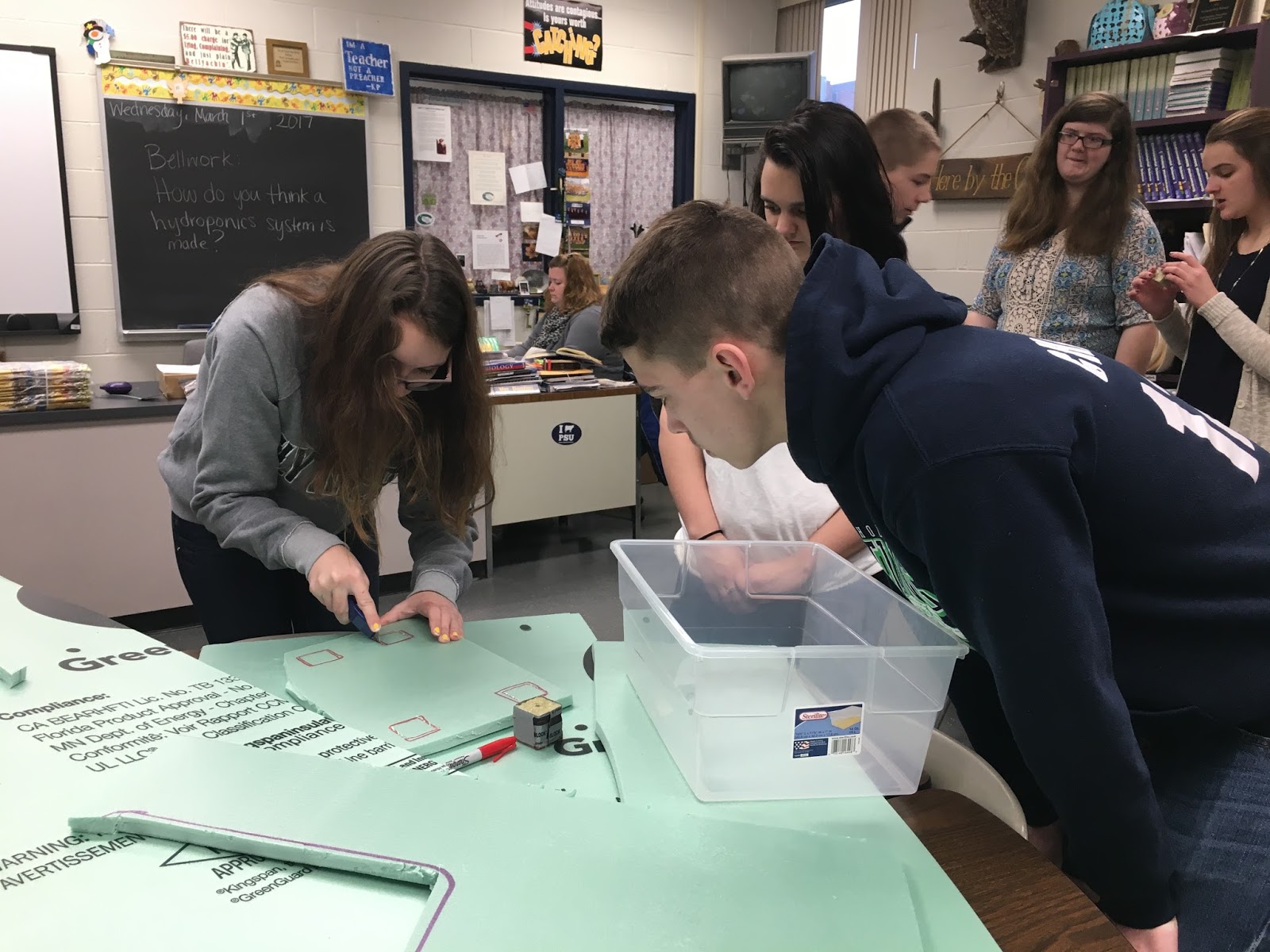
I am finally done with my unit on pest management, and I am moving onto alternative uses for plants. This unit includes my hydroponics project, so students have been doing much more hands-on learning by making their hydroponics system. I think they enjoyed this and I have really been trying to think of ways to make my lessons more hands-on and student centered. I find it hard to do sometimes, when the content I want them to understand is so specific, so I am thankful for projects like these where I can let them take the stage. I also had my students do a discussion on the uses of hydroponics in developing countries where I told them I was going to step back and let them discuss. They're a quiet class and being the first class of the day doesn't work in my favor so I was was worried that this discussion wouldn't go well, but once they got going, it actually went better than planned and I think they enjoyed it!



I tried this in my food science class as well. Other than introducing the topic of food irradiation, I didn't talk much about it at all. Instead, I split them into two groups and had them do some research on it, and then had them create a debate on the pros and cons of irradiated food. This is my talkative and energized class, so I think it was a great fit for them. Again, I didn't anticipate the debate taking very long at all, but they spent the entire class period on it, and they had some really great arguments for and against it. 

Food science debate on food irradiation

I know I can't rely on this all of the time, but I now know what it looks like to try a less teacher centered approach.

Into the shop!

I'm also excited because I'm getting students to actually start working in the shop. In welding, I gave them a demonstration (which went pretty well despite some of my fears!) and they got to practice with their welds. I have some challenges with students being uncomfortable welding, but I am hopeful that the ones who are motivated will get the opportunity to practice and make something neat. I know that flexibility is key for the other students, but it does make it a little challenging to essentially plan two different lessons for the same class period. It is also a challenge because I want to make sure I am watching for safety of the students welding and I don't want to have my attention divided. But I know that each student is important and I have to make that commitment to educate each of them. 

I don't have my small engines students in the shop yet, but next week, I'm going to get them working in there. They haven't said so yet, but I think they're itching to get their hands dirty (I know I want to see them in action!). So I think that will make planning those lessons a little easier.

The pressure is on

Public speaking exercise
Before, I felt that I had a lot of time, but now I am starting to feel some of the pressure of deadlines. I really want to take my time with my public speaking unit, for example, but many of them are also competing in the speaking contests and they must hand in their manuscripts by next week. This means I need to speed up some of my lessons or remove some completely. Again, I know that flexibility is key, but I also hate rushing students when I feel they need more time. It just means I need to be more efficient with my lessons. 

Another public speaking exercise on tone of voice with children's stories!

I also feel some pressure in making sure I complete all of my units before the conclusion of student teaching. Everything has taken much longer than I anticipated and everything has had to be shifted to later dates. I am working through some ways to be more efficient without leaving the students wanting more, so hopefully this will work itself out in the end!

In the world of FFA 

Secretary of Agriculture Russell Redding and Representative Mark Keller at the Farmer's Breakfast with Perry County FFA members and State FFA officers
On Friday, we attended Representative Mark Keller's breakfast. This breakfast hosted by Mark Keller introduced several different speakers and organizations that contribute to agriculture and growth in the county. It was neat to meet some new people, and become a little more connected with the county. 

Plans for next week

In plant science, students will continue working with their hydroponics system and will learn a little about aquaponics as well.

In small engines, I am getting students in the shop and having them disassemble engines.

In agriscience, they will continue to work on their speeches.

In welding, Mr. Statler will not be there, so I can't have them working on the equipment. Instead, they will work on a career exploration project.

In animal bioscience, we are going to finish with the anatomy of the udder and then we are going to talk about milk components. 

In food science, we will cover food packaging, and finish up our unit on food preservation. I anticipate moving onto the next unit by the end of the week.

In leadership, students will continue working on their speeches for the public speaking unit. 

Leaving Thought

"When it rains, look for rainbows. When it's dark, look for stars" -- Unknown

Saturday, February 11, 2017

All Hands On Deck: Week #5

This week we switched gears a little bit. It was a short week because we had a snow day on Thursday, and on Friday we regrouped with the cohort and University Staff at Penn State. But either way, there was a lot of hands-on action happening which was a little different from what we had been doing.

Making butter!

First... the problem solving approach

One of my areas of improvement was having the students do some more hands-on or student centered learning. In plant science, I was introducing Integrated Pest Management. I actually performed my lab that I did with my cohort members in the fall with a few adjustments per their feedback. You can check out my blog on this lab here.

Students had just learned about the pests and were starting to be introduced to the idea of pest management. I gave them a scenario and they were given the task of solving this scenario. I led them through the steps of IPM without telling them what IPM was or that they were doing it. Once they solved the pest issue and figured out how to best manage the pest, I told them that what they did was essentially IPM. 

I thought the lesson went really smoothly. The only thing that I wish went differently was that I didn't already introduce them to the pest earlier in the Pest ID lessons. Most of them caught on quickly that the pest they needed to find was the Bean Leaf Beetle just by looking back at their notes. I didn't want to trick them but I also didn't want it to be so easy! I still had them find a resource that backed up their claims so they still had to do some research. They did have to do more work later on, though, as they followed the other steps of IPM so it wasn't like they were just sitting around. Point is... I need to make it a little more challenging for them!


Second... Inquiry Based Instruction

Students in my small engines class have pretty much just been in the classroom. While I think they've enjoyed it so far, I think some of them were itching to actually start working on engines. This was my worry as I was planning my unit because of how much content needs to be understood. Yes, they could tear down engines at essentially any point, but either way, there is quite a bit of content to discuss so that they fully understand the functions of an engine. 

Assembling parts of an engine... no tools and no manual!

My cooperating teacher and I decided it would be nice to have them spend a day in the shop. They had just learned about safety, tools, and parts. They had the base knowledge to be able to go in the shop and tinker around with the engines. So I split them into groups and told them to try and assemble the engine based on what you know about the parts and how they function together. They were not going to worry about using tools; just try and see where everything fits.

This was also a great time for me to check on their safety. I thanked them for following safety procedures and remembering those rules. 

I really enjoyed this activity and I think they appreciated something a little different too. It was a great opportunity for them to try and put together the parts just off of prior knowledge. I had to tell some of them to picture themselves as a little three year old putting the round block in the round hole, and the square block in the square hole. If you look close enough, some parts are shaped in such a way that it logically only fits in one place. 

Another thing that was really cool was that I was able to ask them questions about how they knew something went in a certain spot. How do they know the exhaust valve goes in one hole vs. the other? Knowing what the carburetor is, where do you think it goes? 

Third.... hands-on laboratory lessons

Making a battery with pennies and salt water
With my group of Life Skills students, we continued doing fun labs and activities. This week, some of our labs included making butter, making plastic out of corn starch, and running a potato battery and a penny battery. Some worked better than others, but I think either way there was a lesson for them to take away. I think they really enjoyed doing these mini lessons with me and I so enjoyed working with them. Now they are back in the classroom with the rest of their peers, and soon, I'll be taking over that class!

Penny battery circuit lab

One thing that I must say that I really enjoyed was being able to teach them applicable lessons in measuring and mathematics. Some of the labs I did with them needed specific measurements so I would tell them that amount and they would show me how much that was or we would look at it together and see if that was enough. I liked this because I went into it thinking I was only going to be teaching about corn to plastic, for example, but the result is that they walk away with practice of some everyday skills. They may never make anything into plastic from corn starch again, but they will certainly use measurement and mathematics and other problem solving skills in their future. It's an educational win!

Heating up the corn starch mixture

Upcoming plans

In Plant Science, we are going to finish with our discussion about pest management and then I am going to have them work on and present presentations about Pest Management and Control. 

In Small Engines, we are going to finish talking about energy conversion principles and start talking about engine classifications.

In Welding, we are going to finish up our conversation on safety and tie in any more pieces of equipment necessary, and then they will take their safety exam.

I am starting Animal Bioscience on Monday so I will begin the unit on Dairy Cattle Production talking about breeds of cattle and getting into anatomy.

In Food Science, we are going to finish up talking about the history of food preservation and then we are going to get into heat preservation.

I am also planning on starting Leadership next week, so I will begin with having them work on public speaking in preparation for the speaking CDE. The lessons won't be specific to the CDE, but rather how I can prepare them for speaking in life (which will subsequently prepare them for the CDE). 

Next week's about to get a whole lot busier for me... I hope I can manage it all!

Leaving Thoughts

"And I will be to her a wall of fire all around, declares the LORD, and I will be the glory in her midst" --Zechariah 2:5

Friday, February 3, 2017

The Joys and Discomforts: Week #4

What a wonderful week it has been! I still feel like I am in the "honeymoon" stage. Sure there have been some challenges, and sure I've pushed myself in many ways, but I feel empowered. My students are great and my cooperating teachers are inspiring. I am so lucky to be where I am at; I truly believe this. Even though things have been going well, I am learning a lot and continuing to adapt and grow. I feel in all honesty that teaching is where I belong.


Now that I've got that off my chest, I can begin to really talk about the blessings and challenges of my week.


Welding students working on safety posters

Rolling with the punches

I believe I've been doing pretty well with flexibility so far despite my mental need for order and organization. However I find that a lot of my plans are changing. Some of this is due to things out of my control. For example many students are still out due to sicknesses and sports, etc. This has brought several classes down to half their size (no exaggeration!). Also, on Tuesday, there was a two hour delay, so two of my classes were cut out from there. This not only pushed everything back, but in Plant Science, I decided to move around a lesson to today rather than split a two-day lesson over the weekend.


Party Host E-Moment learning about weed pests

The other changes have come from my personal decisions. There were some projects or lessons that I thought were really neat while I was planning it, but looking at it now, 1) we don't have time, 2) I feel like they aren't a good idea anymore, or 3) the students are above or sometimes even below the level at which a certain assignment/activity is set at.


Small engines students demonstrating the function of engine parts
All of these factors combined can make it really challenging to follow a lesson plan let alone a unit plan. I know that it's all part of the experience, however, and adjusting to the needs of my students is of the utmost importance. The detail-oriented side of me is hoping for my plans to follow their original intent so I don't have to change so much!


A fourth classroom

I have two cooperating teachers, and then I work with the shop instructor, Mr. Statler, to teach welding. So I usually jump around 3 different classrooms throughout the week. However, this week, I had the opportunity to teach Life Skills students in their learning support room. These students are normally in my 3rd period Agriscience class, but due to the rigor and nature of the lessons and experiments the students in that class were doing, Mr. Clark thought it would be best to have separate lessons for them.


The topic is on alternative energy and fuel. I joined them in their learning support room and did little lessons with them every day this week. I had an aid with me who was a great help, but I was pretty much on my own as far as facilitating the lesson goes. I was up for the challenge!


Personal Tree Cookies
I had such a great time with these students. I think they really enjoyed me being there and enjoyed the lessons I was doing with them. On Monday, I taught them about chemical bonding. They got to make chemical bonds out of toothpicks and gum drops. Tuesday, we didn't have this class, but Wednesday, we talked about renewable energy and fossil fuels, and we did an activity with recycling and composting vs throwing things in the trash. Thursday, they did something completely different involving reading tree cookies to determine the age of trees, and talking about some by-products of trees. And today, Friday, I showed them a bunch of animal pelts, skulls, and footprints, and had them figure out what the animal was and feel the materials.


Making chemical bonds out of gum drops and toothpicks


There were a lot of things I noticed from observing them and working with them in the Agriscience class, and Mr. Clark shared some input on how he manages them. I also got to meet with the special needs coordinator this week who was able to give me insight on teaching with these students. Even though I did not have the experience or expertise working with students in that situation, I felt very comfortable with teaching them.


I don't always know if they've retained the information the next day, but I am confident that they are learning something, and that they enjoy some of the hands-on activities I am doing with them. They really are quite a joy to work with! I will be working with them for a few more days yet, and then we will be back in the classroom with the rest of the students. I feel like this is exactly the kind of experience I need and want to have so that I can better understand my students in years to come. And I look forward to working with them every day!


"The joys and discomforts of agricultural life..."

Just as the FFA Creed says, I hope to exert an influence on my school and community which will stand solid while I perform my duties during student teaching. I may not always know what the next day will bring, but I know that it brings me great joy to see my students and work with the teachers and staff at Greenwood High School.


Next week in Plant Science, I am excited to start the week with my problem solving approach lesson on Integrated Pest Management. This is the lab I did at Penn State, and now with some refining and a real class, I can try it out for real. I'm nervous but mostly excited, and I think this will change the pace compared to what we have been doing so far. The rest of next week, we will get into pest management and pesticide safety.


In Small Engines, the students are going to take the parts identification quiz, and they are even going to get their hands on a little inquiry as they try to assemble an entire engine based on what they know so far about the parts. They won't necessarily be putting it together using the tools and measurements, rather, they are going to try and see if they can figure out how the parts fit together and really visualize the functions of those parts in one whole engine. They will get started on energy conversion principles as well.


In Agriscience, I will still be with the Life Skills students, and we will be making butter, making plastic from corn, and making a potato battery.


In Welding, students will finish up on their discussion about safety, and get into tools a little bit, and then they will take their safety exam.


I am also picking up Food Science next week, where I will be starting on the Methods of Food Preservation unit.


My goals for next week are to work on planning in time for review of objectives/reflection at the end of the period. I try so hard to keep track of my time and I want to squeeze as much as I can into the class period but before I know it, the bell has rung. I need to work on stopping instruction earlier even if we aren't done yet in order to review.


Another goal, which is perhaps a long term goal, is to create lessons that are more student centered rather than teacher centered. I believe it is my need for organization that prevents me from planning lessons where I don't have direct control over what the students are doing. But I know that it is so important for their learning and beneficial for their problem solving skills so I agree fully that this is a necessary change (and a good change). I hope to overcome this challenge though!


Leaving Thought

"Do small things with great love" -- Mother Theresa